
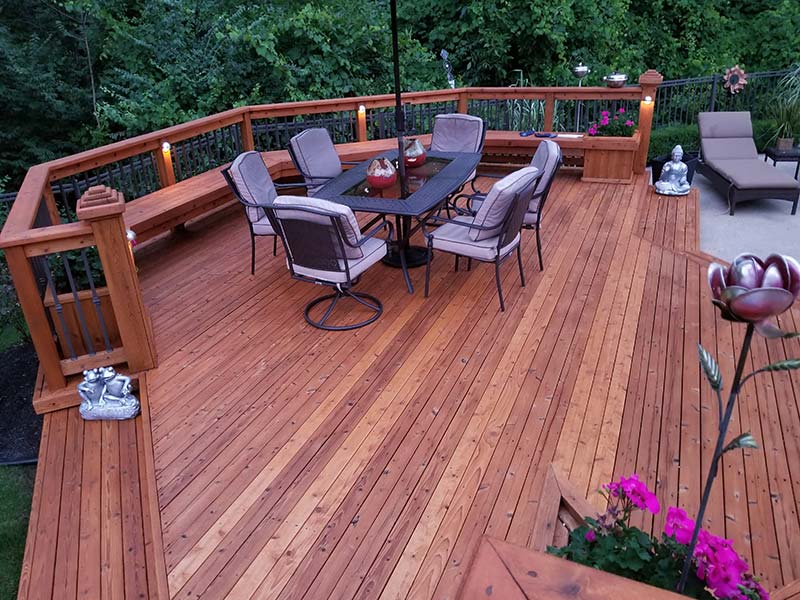
There is nothing better than a summer evening on the deck — until the mosquitoes show up.
For many Michigan and Chicagoland homeowners, the problem is not whether they have enough outdoor space. It is whether that space stays comfortable when they actually want to use it: after dinner, near sunset, on weekends, or during those warm summer nights when everyone wants to be outside a little longer.
That is where mosquito-smart deck design comes in.
A mosquito-smart deck is not about turning your backyard into a sealed-off box. It is about designing an outdoor living space with comfort in mind from the beginning. The right combination of screens, shade, drainage, lighting, layout, and low-maintenance materials can help you enjoy your deck more often — especially during the parts of the day when bugs tend to be most noticeable.
At Miles Bradley Building and Remodeling, we design and build custom decks, screened enclosures, pergolas, gazebos, 3-season rooms, deck lighting, railings, privacy walls, and low-maintenance composite decks for homeowners throughout Lower Michigan and the Chicagoland area. Here are some of the best ways to make your outdoor space more enjoyable after dusk.
Before choosing deck boards, railing colors, or lighting styles, it helps to think about how your family really wants to use the space.
Do you want a quiet place for morning coffee? A covered area for dinner outside? A larger entertainment space for cookouts? A bug-protected room where kids, pets, and guests can relax? Or do you want a deck that connects several areas together, such as a grill station, dining table, hot tub, and lower patio?
The best deck designs begin with those everyday details.
A simple platform deck might be enough for some homeowners. Others may get much more value from a multi-level layout, a screened enclosure, a pergola over the dining area, or an under-deck dry space that creates another usable area below. When the design reflects how you live, the deck becomes more than a place to stand outside. It becomes an extension of your home.
 One of the most effective ways to make a deck more comfortable in mosquito season is to include a screened enclosure.
A screened enclosure gives you the feeling of being outdoors while adding a layer of protection from insects. It is especially useful for homeowners who love eating outside but do not love swatting bugs away from dinner. Miles Bradley’s screened enclosure page specifically notes that screened-in areas can make outdoor dining more enjoyable by helping keep insects away while still letting homeowners enjoy the weather.
A screened enclosure can work well for:
For some homes, a screened enclosure is the perfect middle ground between an open deck and a full indoor addition. You still get fresh air, natural light, and backyard views, but the space feels more comfortable and protected.
A screened enclosure is a great option for warm-weather comfort, but some homeowners want a space they can use for more of the year. That is where a 3-season room can make sense.
A 3-season room can give you a more finished outdoor living area that feels connected to the home. It can be a place for morning coffee in spring, quiet evenings in summer, and comfortable weekend afternoons in fall. For homeowners in Michigan and Chicagoland, where outdoor living weather can change quickly, a 3-season room adds flexibility.
It can also be a smart choice if you want the look and feel of an outdoor room without fully committing to a traditional home addition.
When planning a 3-season room, think about how much sunlight the area gets, how it connects to the deck, what views you want to preserve, and whether you want space for dining, lounging, or both.
Mosquito-smart design is not only about screens. It is also about creating a space people want to stay in.
A pergola can help define an outdoor “room” on your deck. It adds structure, visual interest, and partial shade without completely closing off the space. This is especially useful for dining zones, seating areas, hot tub areas, or sections of the deck that need a little more privacy.
Pergolas also help a large deck feel more intentional. Instead of one open platform, the deck can have separate zones: one area for grilling, one for eating, one for lounging, and one for relaxing in the shade.
For homeowners who want a custom look, pergolas, trellises, columns, and privacy walls can be designed to match the style of the home and the rest of the deck. Miles Bradley’s site includes trellises, pergolas, columns, deck railings, privacy walls, and related custom deck features among its portfolio categories and services.
A covered or screened space should still feel fresh and comfortable. That is why airflow matters.
A deck enclosure that feels too closed off may not get used as much as expected. A smart design considers where breezes come from, how the roofline affects air movement, and how people will move between the house, deck, yard, and outdoor seating areas.
This is one reason custom design is so important. Two homes may have the same square footage, but completely different sunlight, shade, wind, privacy, and backyard conditions. A deck that works beautifully in one yard may not be the best fit for another.
When designing your deck, think through questions like:
These details can make the difference between a deck that looks good in photos and a deck your family uses all the time.
A mosquito-smart deck should also be easy to care for.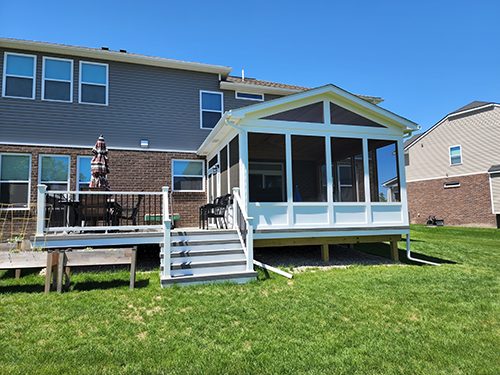
When a deck is difficult to maintain, it can quickly become less enjoyable. Boards that require frequent sanding, staining, sealing, or repairs can turn your outdoor living space into another chore. Low-maintenance composite decking helps reduce that burden.
Composite decking is popular because it offers a clean, finished look with less upkeep than traditional wood. Miles Bradley’s site notes that the company specializes in low-maintenance decking and works with composite materials, including Trex and TimberTech. The site also identifies Miles Bradley as a certified Trex Platinum Contractor.
For homeowners who want to enjoy their deck more and maintain it less, composite decking can be a strong choice. It pairs well with screened enclosures, pergolas, deck lighting, privacy walls, and custom railing systems.
A low-maintenance deck does not mean “no maintenance ever,” but it can mean less time spent staining and more time spent relaxing outside.
A beautiful deck should not become unusable the moment mosquitoes come out.
With the right design, your outdoor space can be comfortable, practical, and inviting throughout the season. Screened enclosures can help protect dining and lounge areas. Pergolas can add shade and structure. Deck lighting can extend your evenings. Composite decking can reduce maintenance. Drainage and under-deck dry space systems can make the entire backyard more usable.
The result is not just a better deck. It is a better way to enjoy your home.
If you are ready to create a custom outdoor living space in Michigan or the Chicagoland area, Miles Bradley Building and Remodeling can help design and build a deck, screened enclosure, pergola, 3-season room, or low-maintenance composite deck that fits your home and lifestyle.
Request a quote today and start planning an outdoor space you will actually use — morning, afternoon, and after dusk.
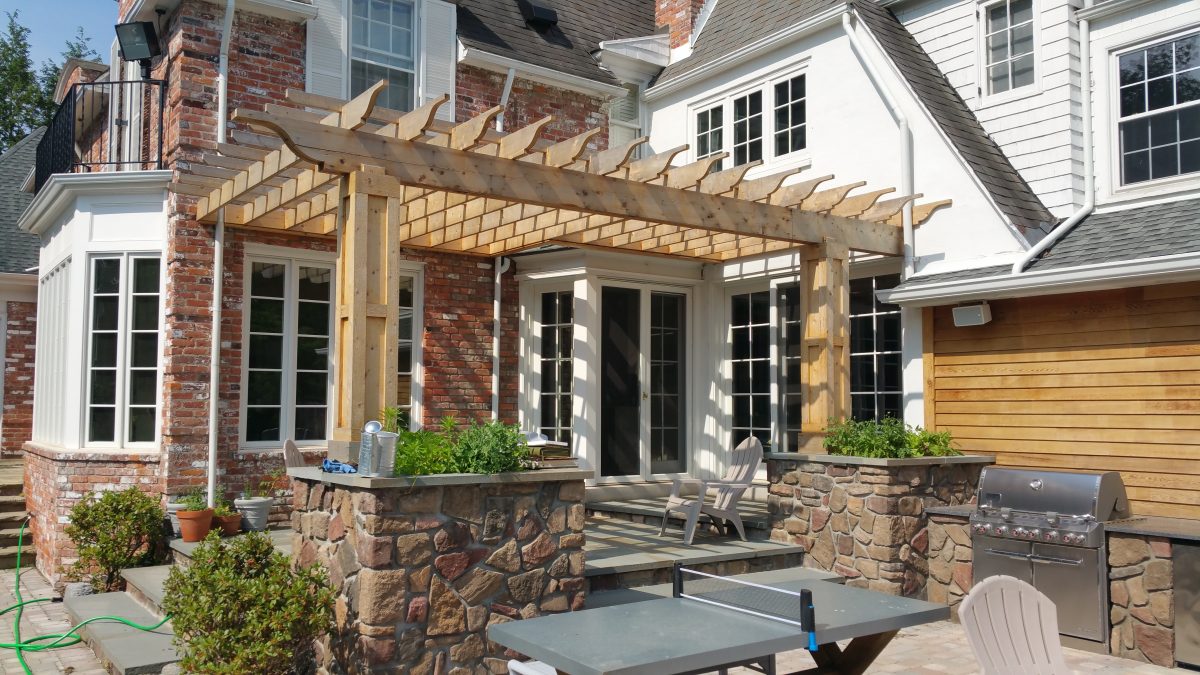
Add more elegance to your life. Get a pergola addition to your home today!
If you’ve never experienced the luxury and bougies of a pergola, you’re missing out! Pergolas are a beautiful way to increase your outdoor living space. In addition to beautiful design, they also provide a shady garden feature to walkways, decks, or outdoor sitting areas.
While we may highlight the practical uses, adding a pergola to your home will increase your home’s resale value in the long run. If you’re unsure of what a pergola is, let us explain them. Pergolas are known for their vertical pillars that support either cross beams or open lattice. The most common sight on a Pergola is climbing vines, hanging lights, or curtains, all of which make the pergola stand out and look beautiful.
Pergolas are wonderful because not only do they enhance your outdoor space, but they are also functional as well. They add an extra usable space on your deck or garden that can provide a layer of shade between you and the hot summer sun. If your Pergola is big enough, entertaining your guests in a cozy and warm environment will make your next dinner party feel fabulous. Being able to lounge under the shade on your porch or back deck is a wonderful feeling. In addition to letting you be outside longer and more comfortably, pergolas add more to your home’s value as well.
The biggest difference between a gazebo and a pergola is that gazebos are almost always shaped like an octagon with a roof over top. Pergolas do not have covered roofs and are generally square with exposed beams.
A Trellis is different from a pergola in that it consists of latticework that is attached to a structure for vines to climb on. Whereas a pergola has larger columns and (most popularly) has horizontal planks of wood on top.
Arbors are small archways that can be used for climbing plants to use as lattice as they grow. While pergolas and arbors both have the same vine climbing feature, pergolas are much biggest and more structurally sound.
No matter what kind of structure you’re looking for in your backyard Miles Bradley can help! We have been building pergolas, gazebos, and trellises for our clients in South East Michigan for over 25 years. We’ve had clients from Brighton, Livonia, to Farmington Hills and Southfield. So why wait? Get a free quote on your next project today!