
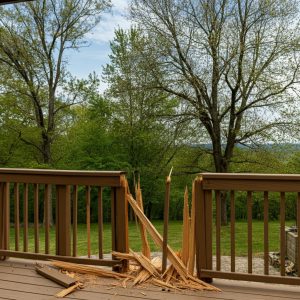
Picture this: It’s a snowy Saturday evening in January. You’re hosting friends and family for a cozy winter gathering. Boots stamp snow onto the deck, kids bundle up to play outside, and laughter echoes against crisp, cold air as guests lean on the deck railing to admire the frosty landscape. Then—CRACK.
In a split second, the wood gives way.
This scenario is a homeowner’s worst nightmare, but it happens more often than you might think. The results can range from an embarrassing disruption to a catastrophic injury. A fall from a standard deck height of just 3 to 4 feet can result in broken bones, head trauma, or worse. The risk is even higher when small children or elderly guests are involved.
At Miles Bradley, we have replaced hundreds of failed railing systems across Southeast Michigan. We have seen the aftermath of neglected maintenance and improper builds. Safety is not just about following rules; it is about protecting the people you love.
Here is everything you need to know about why deck railings fail, how to spot the warning signs, and what to do to ensure your outdoor space remains a safe haven for your family.
We often take the structural integrity of our homes for granted. We assume that because a structure is standing, it is solid. However, decks are unique. They are constantly exposed to the elements—rain, snow, baking sun, and freezing temperatures. Over time, these forces wage war on the wood and metal holding your deck together.
A railing does not usually fail because of one single event. It fails because of a slow, invisible process of degradation that culminates in a sudden break when pressure is applied. Understanding the mechanics of this failure is the first step in prevention.
Through our years of inspecting and repairing decks in Northville, Novi, and beyond, we have identified five primary culprits behind railing disasters.
This is the silent killer of deck safety. Pressure-treated lumber often looks pristine from the top, leading you to believe the structure is sound. However, gravity pulls moisture down. Where the post meets the deck framing, water can pool and seep into the wood grain.
If the original builder did not properly flash or seal these connection points, the wood can begin to rot from the inside out in as little as five to seven years. By the time you see the rot, the structural strength is often already gone.
Your deck is held together by hundreds of screws, bolts, and nails. Over time, wood expands and contracts with the changing seasons. This constant movement can work original fasteners loose. Furthermore, standard steel nails can rust, losing their grip strength.
It often only takes one significant force—like a grown adult leaning back or a group of kids swinging on the rail—to snap a rusted fastener or pull a loose nail free.
Those skinny 2×2 wooden spindles (balusters) that run vertically along your railing are vulnerable. They were not necessarily designed to withstand harsh Michigan winters indefinitely. The freeze-thaw cycles can dry out the wood, making it brittle.
We have seen cases where a simple kick from a boot or a stumbling impact snaps these balusters clean off, leaving a dangerous gap in the safety barrier.
Sometimes the wood is fine, but the attachment method is flawed. We frequently see the entire railing section pulling away from the house or the main deck structure. This usually happens because of failures at the ledger connections or rim-joist attachments.
Unfortunately, this is often due to builders cutting corners. We still encounter decks built as recently as 2018–2020 where the attachment methods were insufficient from day one.
Building codes exist for a reason. They evolve as we learn more about safety and material longevity. Many older decks were constructed before Michigan adopted the strict 200-lb live load requirement for railings.
These older structures simply cannot handle the real-world use of today’s gatherings. If your deck is older, it might be legally “grandfathered” in, but that doesn’t make it safe for your guests.
You do not have to wait for the crash to know there is a problem. Your deck will often give you clues that it is struggling. We recommend performing a visual and physical inspection of your railing at least once a year. Look for these red flags:
If a failure occurs, panic is the enemy. Follow these steps to manage the situation safely:
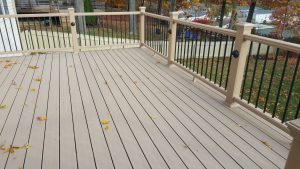
A broken deck railing is not just an inconvenience; it is a liability and a severe safety hazard. If your railing is more than 8–10 years old, feels wobbly, or shows any of the warning signs we discussed, you need to act before your next cookout.
Don’t gamble with the safety of your family and friends.
Schedule a free deck safety inspection with Miles Bradley today. We will give you the straight answer on whether your deck can be repaired or needs a full replacement. No sales pressure—just honest advice from local experts.
Posted In: Deck Railing
Tags: deck railing breaks, repairing deck railing