
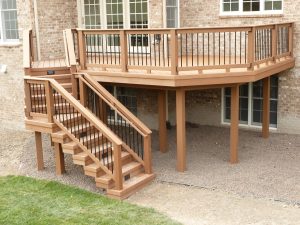
A wood deck can add beauty, function, and valuable outdoor living space to your home. Whether you use your deck for summer cookouts, family gatherings, relaxing in the sun, or simply enjoying your backyard, regular maintenance can help keep it looking great and performing well for years.
Because wood decks are constantly exposed to sunlight, rain, snow, moisture, and changing temperatures, they can eventually show signs of wear. Boards may crack, fasteners can loosen or corrode, and areas that remain damp may become vulnerable to rot.
Fortunately, routine wood deck care and maintenance can help you identify problems early and protect your outdoor space.
Spring and summer are great times to inspect your deck, especially after the harsh weather conditions that Michigan can experience throughout the winter.
Start by walking around the entire deck and looking for obvious signs of damage. Pay particular attention to areas around planters, downspouts, stairs, and other places where moisture may collect.
Here are several important areas to check.
Check deck boards, stairs, support posts, railings, and accessible areas underneath the deck for signs of deterioration.
Wood that feels unusually soft or spongy may indicate moisture damage or decay. You can gently test suspicious areas with a screwdriver to determine whether the wood has significantly softened.
Pay extra attention to sections that frequently remain damp. Addressing damaged wood early can help prevent a small repair from developing into a much larger problem.
The ledger board is an important structural component that connects many decks to the home. Because of its location, problems with the ledger or the surrounding flashing can create serious safety concerns.
Look for signs of:
A deck ledger should not rely solely on nails for its structural connection. If you are unsure about the condition of the ledger or how your deck is attached to your home, consider having it inspected by an experienced deck professional.
Don’t limit your inspection to the boards you walk on. Take a look underneath the deck when possible.
Check the posts, beams, joists, brackets, screws, bolts, and other connectors. Look for rust, corrosion, cracks, movement, or deterioration.
Loose or severely corroded hardware should be addressed promptly. Structural problems underneath a deck are not always obvious from the surface.
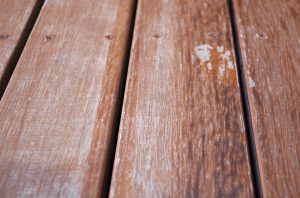
Wood naturally changes as it is exposed to the elements, and a few small surface cracks do not necessarily mean a board needs to be replaced.
However, you should watch for boards that are:
Replacing damaged boards can improve both the appearance and safety of your deck while preventing the damaged area from becoming worse.
Railings should feel solid when gently tested. If a railing moves noticeably, inspect its posts, connections, and fasteners to determine the cause.
You should also inspect stairs and handrails. Look for loose boards, deteriorated stringers, damaged steps, or other areas that could create a safety concern.
Avoid simply covering a structural crack with adhesive without determining why the railing or stair component became loose. Significant movement or deterioration may require repair or replacement.
Regular cleaning is another important part of wood deck maintenance. Leaves, dirt, pollen, mildew, and other debris can collect on the surface and between boards.
Start by removing furniture, planters, grills, and other items from the deck. Sweep away loose debris and clean between the boards where dirt and organic material can accumulate.
Use a cleaning product designed for your particular type of wood and follow the manufacturer’s directions. A deck brush can help loosen stubborn dirt before rinsing the surface.
A pressure washer can be used on many wood decks, but more pressure is not necessarily better.
Excessive pressure or holding the nozzle too close to the surface can damage wood fibers and leave visible marks. If you pressure wash your deck, use a lower setting, a wide fan spray, and test an inconspicuous area first.
For some decks, a deck cleaner, brush, and garden hose may be all that is necessary.
Cleaning your deck is only part of protecting the wood from the elements.
Depending on the type of wood and existing finish, your deck may periodically benefit from staining or sealing. A quality exterior deck finish can help reduce the effects of moisture and UV exposure while refreshing the appearance of the wood.
Before applying any new product, make sure the deck is clean, properly prepared, and completely dry. Always follow the stain or sealer manufacturer’s application instructions.
Moisture is one of the biggest concerns when maintaining an outdoor wood structure.
Make sure gutters and downspouts are directing water away appropriately. Avoid allowing leaves and debris to remain trapped against the deck, and occasionally move planters or outdoor furniture so the wood underneath can dry.
Good drainage and airflow can make a significant difference in the long-term condition of a wood deck.
Your deck is an extension of your home, and a little preventative maintenance can go a long way.
Regularly cleaning the surface, inspecting the structural components, checking railings and stairs, and addressing damaged boards early can help your deck remain a comfortable and attractive place to spend time outdoors.
If your current deck needs more than routine maintenance—or you’re thinking about adding a new deck to your backyard—Miles Bradley Building and Remodeling can help.
Contact Miles Bradley with your questions or fill out our free quote request to get started on your next outdoor home improvement project.